Viral Payment technology Stories Right Now: 12 Headlines Americans Are Reading
Viral payment technology stories rarely stay in one place. A single headline can move from a local website to national television and then to millions of screens within hours. Below is a roundup of recent headlines from across the USA, each linked to the original report so you can read the full story yourself.
Every item below points to a real report from a named outlet. The commentary around each headline is general context about how news spreads and how to read it, not new reporting. If a story matters to you, follow the link and read it in full before you share it.

Where These Headlines Come From
The stories below were found through public news feeds that list headlines from many outlets. We look for recent reports that match the topic, skip repeats of the same story, and keep the outlet name and date next to each headline so you can judge the source for yourself.
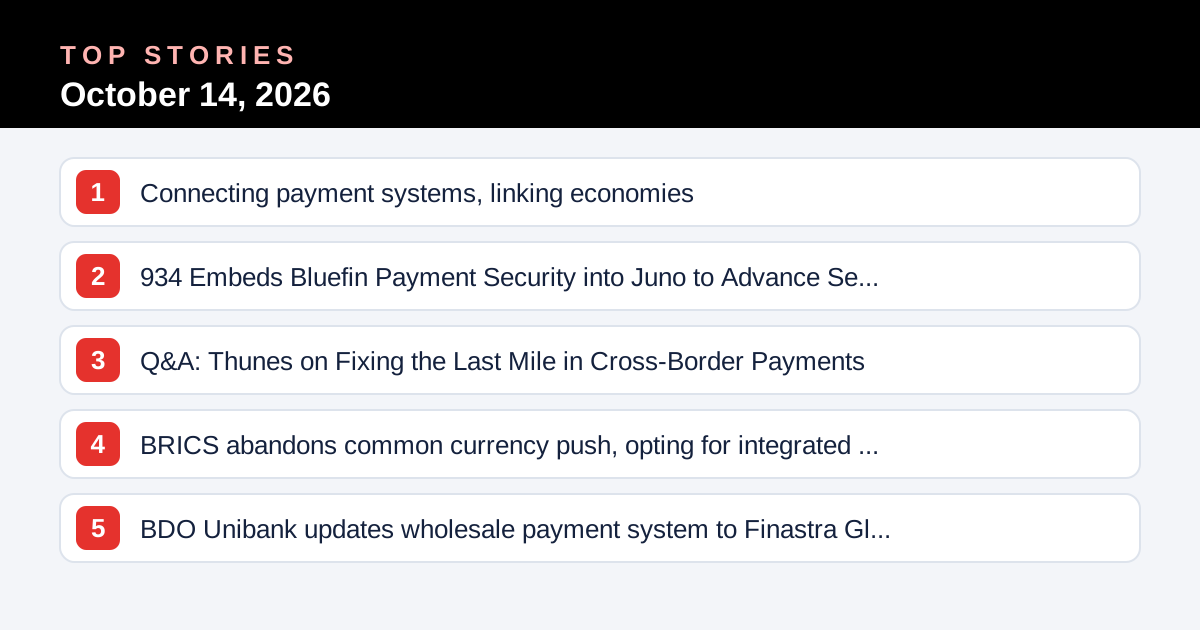
Connecting payment systems, linking economies
The headline "Connecting payment systems, linking economies" appeared on Oct 13, 2026 from CEPR. Stories that touch everyday life tend to be passed along fast, even when only a few details are known. A good habit is to read past the first paragraph and look for named sources and clear dates. The full article is the place to find names, numbers, and quotes, none of which are repeated here.
Source: CEPR, Oct 13, 2026
934 Embeds Bluefin Payment Security into Juno to Advance Secure, Connected Hospitality Payments
On Sep 30, 2026, Business Wire published a report headlined "934 Embeds Bluefin Payment Security into Juno to Advance Secure, Connected Hospitality Payments". Stories that touch everyday life tend to be passed along fast, even when only a few details are known. Before sharing, it helps to open the linked report and check who wrote it and when it was published.
Source: Business Wire, Sep 30, 2026
Q&A: Thunes on Fixing the Last Mile in Cross-Border Payments
On Oct 5, 2026, FinTech Magazine published a report headlined "Q&A: Thunes on Fixing the Last Mile in Cross-Border Payments". Interest in a story often grows when several outlets cover it at once, which makes it feel bigger than any single report. Before sharing, it helps to open the linked report and check who wrote it and when it was published.
Source: FinTech Magazine, Oct 5, 2026
BRICS abandons common currency push, opting for integrated payment systems to bypass US dollar friction
Business Insider Africa ran this item on Sep 16, 2026 with the headline "BRICS abandons common currency push, opting for integrated payment systems to bypass US dollar friction". Headlines like this spread quickly because readers often share them before opening the full article. Readers who want details should follow the link, because this summary does not replace the original reporting. We include it here because it was widely reported, not because we have verified every detail.
Source: Business Insider Africa, Sep 16, 2026
BDO Unibank updates wholesale payment system to Finastra Global PAYplus
FinTech Futures ran this item on Oct 9, 2026 with the headline "BDO Unibank updates wholesale payment system to Finastra Global PAYplus". A headline can only hold a fraction of a story, so the full report usually contains context that a headline leaves out. Before sharing, it helps to open the linked report and check who wrote it and when it was published. We include it here because it was widely reported, not because we have verified every detail.
Source: FinTech Futures, Oct 9, 2026
Check Your Vendors’ Quantum-Safe Readiness with New Tool from Nacha’s Payments Innovation Alliance
The headline "Check Your Vendors’ Quantum-Safe Readiness with New Tool from Nacha’s Payments Innovation Alliance" appeared on Oct 13, 2026 from Business Wire. Short headlines are built to be understood at a glance, which is why they travel so well on social media. Before sharing, it helps to open the linked report and check who wrote it and when it was published. The full article is the place to find names, numbers, and quotes, none of which are repeated here.
Source: Business Wire, Oct 13, 2026
What can Asia, Global South learn from India’s new digital payment fee?
The headline "What can Asia, Global South learn from India’s new digital payment fee?" appeared on Sep 24, 2026 from South China Morning Post. Headlines like this spread quickly because readers often share them before opening the full article. A good habit is to read past the first paragraph and look for named sources and clear dates. We include it here because it was widely reported, not because we have verified every detail.
Source: South China Morning Post, Sep 24, 2026
nsKnox Becomes a Nacha Preferred Partner for Account Validation, Risk and Fraud Prevention, and ISO 20022
Under the headline "nsKnox Becomes a Nacha Preferred Partner for Account Validation, Risk and Fraud Prevention, and ISO 20022", Business Wire covered this story on Oct 8, 2026. Headlines like this spread quickly because readers often share them before opening the full article. Readers who want details should follow the link, because this summary does not replace the original reporting. The full article is the place to find names, numbers, and quotes, none of which are repeated here.
Source: Business Wire, Oct 8, 2026
Nayax Announces U.S. Fuel Retail Distribution Partnership with Allied Electronics for VPOS Media 5
Quiver Quantitative reported this story on Oct 6, 2026 under the headline "Nayax Announces U.S. Fuel Retail Distribution Partnership with Allied Electronics for VPOS Media 5". Stories that touch everyday life tend to be passed along fast, even when only a few details are known. Before sharing, it helps to open the linked report and check who wrote it and when it was published. We include it here because it was widely reported, not because we have verified every detail.
Source: Quiver Quantitative, Oct 6, 2026
ACI Worldwide and Finextra Release The Payments 2030 Report
Under the headline "ACI Worldwide and Finextra Release The Payments 2030 Report", FinTech Magazine covered this story on Oct 11, 2026. Headlines like this spread quickly because readers often share them before opening the full article. Readers who want details should follow the link, because this summary does not replace the original reporting. We include it here because it was widely reported, not because we have verified every detail.
Source: FinTech Magazine, Oct 11, 2026
Visa Secures Principal Partner and Payment Technology Role for Australia Rugby World Cups
On Sep 16, 2026, Ministry of Sport published a report headlined "Visa Secures Principal Partner and Payment Technology Role for Australia Rugby World Cups". Headlines like this spread quickly because readers often share them before opening the full article. If the story matters to you, compare it with a second outlet to see whether the main points match.
Source: Ministry of Sport, Sep 16, 2026
European Network for Payments gives 130M users alternative to Visa and Microsoft
Under the headline "European Network for Payments gives 130M users alternative to Visa and Microsoft", Cybernews covered this story on Oct 6, 2026. A headline can only hold a fraction of a story, so the full report usually contains context that a headline leaves out. Before sharing, it helps to open the linked report and check who wrote it and when it was published. This is one of the stories people have been talking about, and the source link below leads to the full report.
Source: Cybernews, Oct 6, 2026
How Fact-Checkers Verify Viral Claims
Fact-checkers follow a simple routine. They find the original source of a claim, look for documents or recordings that support it, and ask whether the evidence matches what is being said. They also check dates and locations, because many viral posts mix real material with the wrong context. Readers can borrow the same habits: trace a claim back to where it started, look for primary sources such as official statements or court records, and be cautious when a post offers dramatic wording but no way to confirm it.
Why Some News Stories Go Viral
News goes viral when it is easy to understand, easy to share, and connected to something people already care about. Strong emotions such as surprise, worry, or pride make readers more likely to pass a story along. Timing matters too: a story that lands during a busy news day may be overlooked, while the same story on a quiet day can dominate every feed. None of this says whether a story is accurate, which is why careful readers separate how popular a headline is from how reliable its details are.
Why Old Stories Sometimes Resurface
Older articles often return to feeds when someone shares them without the original date. Because pages can look new, readers may believe an old event just happened. Related news, anniversaries, or a new development can also push earlier reports back into view. Before reacting to a story, look for the date near the headline and compare it with other coverage. If the details seem familiar, the story may simply be a repeat.
Understanding Anonymous Sources
Sometimes reporters rely on people who cannot be named, for example because they fear losing a job or facing retaliation. Responsible outlets explain why a source is unnamed and try to confirm information with more than one person or document. When you read a story built on unnamed sources, look for signs of that care, such as a description of the source's position and a note on how the claim was checked. Reports that give no explanation at all deserve extra caution.
How to Follow a Story Over Several Days
Big stories usually take days to settle. Early reports are often incomplete, follow-up reports add context, and later articles may correct earlier details. If you want to stay informed without being swamped, pick one or two reliable sources, read their updates once or twice a day, and ignore reposts that add no new information. This keeps you informed without chasing every alert.
Headlines Versus the Full Story
A headline is a promise of a story, not the story. It has to be short, so it compresses events into a handful of words and often drops qualifiers such as who said something, what is still unknown, or what has changed since. Reading the full article usually shows more careful wording than the headline suggests. This is why the links in this roundup matter: they lead to the complete reports where those details live.
Corrections and Retractions: Signs of a Healthy Newsroom
Every newsroom makes mistakes, and what matters is how they are handled. Reliable outlets publish clear corrections, explain what changed, and keep the original page available with a note. If an article has been quietly changed with no explanation, or an error is repeated across many pages, that can be a warning sign. When you see a visible corrections policy, it shows that the outlet is willing to be held accountable by its readers.
Why Numbers in Headlines Need Context
A number in a headline can sound precise while hiding important details. A figure may refer to a single place, a short period, or a particular definition that differs from what readers assume. Percentages can look large when the starting number is small, and totals can look small when spread across many people. The article itself usually explains what is being counted and how, which is why it is worth reading beyond the first line.
The Bottom Line on Today's Viral Payment technology Stories
The headlines above show what many readers across the United States have been following. Each one links to the original report, which is where the facts, names, and quotes belong. Use this roundup as a quick guide, then read the sources that interest you. Quality journalism depends on readers who value accuracy. Think before you click. Keep a list of sources you trust.
This roundup is compiled automatically from the linked news reports. Details may be incomplete or change; please read the original sources.